For years, food delivery platforms dominated the restaurant industry across Europe.
They helped restaurants reach new customers, increase online visibility, and participate in the growing demand for food delivery.
But something is changing.
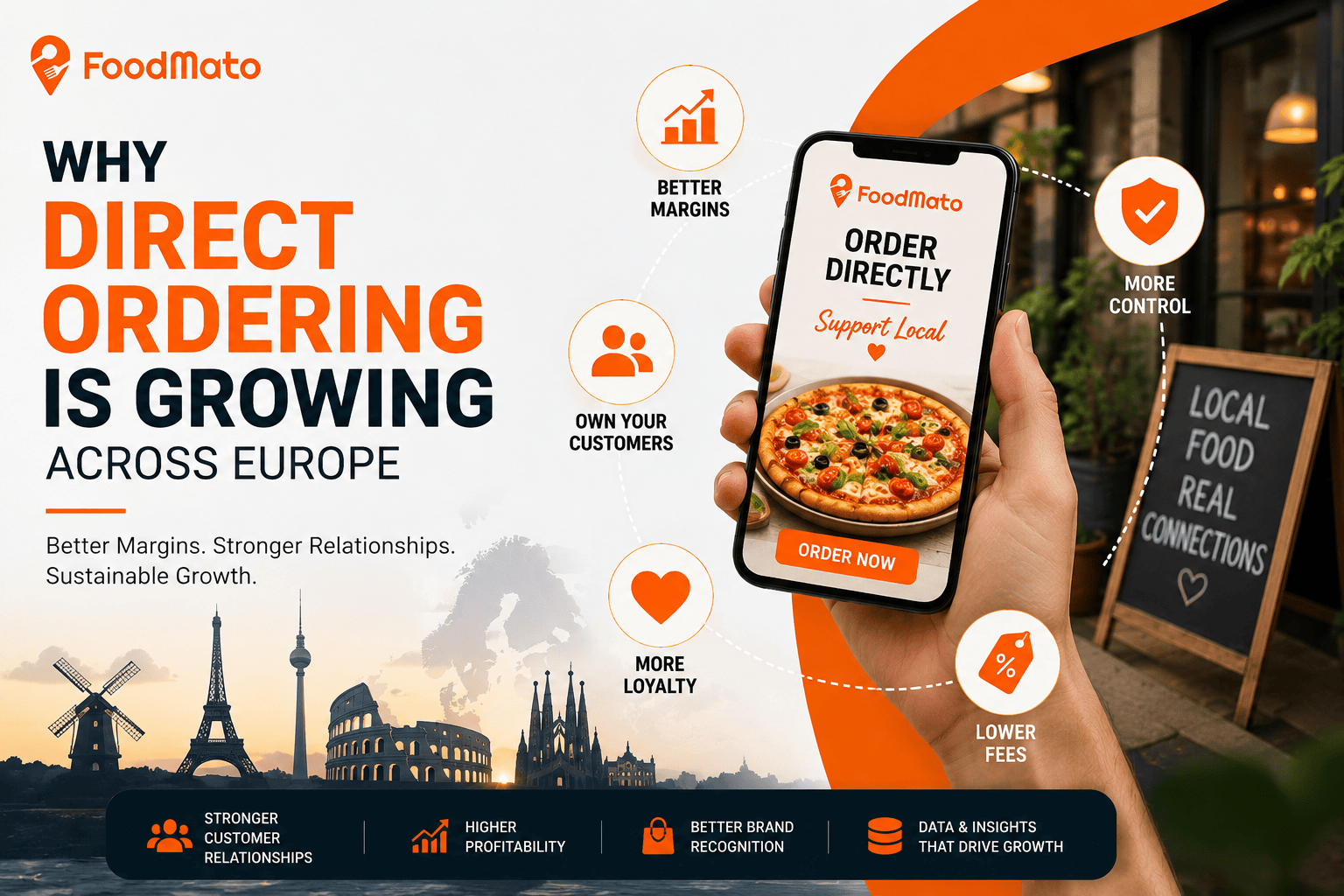
More restaurants across Germany, France, the Netherlands, Spain, Italy, and other European markets are investing in direct ordering systems instead of relying entirely on third-party delivery apps.
This shift isn’t happening because restaurants want fewer orders.
It’s happening because they want:
- Better profit margins
- More control over their business
- Stronger customer relationships
- Greater long-term stability
In 2026, direct ordering is no longer a trend.
It’s becoming a core growth strategy for modern restaurants.
Let’s explore why.
What Is Direct Ordering?
Direct ordering allows customers to place orders directly with a restaurant instead of through a third-party marketplace.
This can happen through:
- Restaurant websites
- Restaurant mobile apps
- QR code ordering
- Restaurant-first ordering platforms
- Social media ordering links
Instead of customers ordering through an aggregator, they order directly from the business they already trust.
The result?
A stronger connection between restaurants and customers.
Why European Restaurants Are Re-Evaluating Delivery Platforms
Food delivery apps helped transform the restaurant industry.
However, many restaurant owners now realize that marketplace growth comes with limitations.
Common concerns include:
- High commission fees
- Customer ownership issues
- Marketplace competition
- Dependence on platform algorithms
- Increasing advertising costs
Restaurants are starting to ask:
“How can we keep the benefits of online ordering without losing control of our business?”
Direct ordering provides an answer.
1. Better Profit Margins
One of the biggest reasons direct ordering is growing across Europe is simple:
Restaurants keep more of their revenue.
When restaurants rely heavily on third-party delivery apps, commissions can significantly reduce profitability.
For many independent restaurants, every percentage point matters.
Direct ordering allows restaurants to:
- Reduce commission dependency
- Improve profit margins
- Reinvest more revenue into growth
- Build healthier long-term businesses
In a market where costs continue rising, profitability has become a top priority.
2. Restaurants Want to Own Their Customers
Imagine owning a restaurant and serving a customer ten times.
But after ten orders, you still don’t truly know who that customer is.
That’s the reality many restaurants face on traditional delivery platforms.
The platform owns the relationship.
The restaurant receives the order.
Modern restaurant owners increasingly recognize the value of customer ownership.
Direct ordering helps restaurants:
- Build customer databases
- Understand ordering behavior
- Create personalized experiences
- Strengthen long-term relationships
Customer ownership is becoming one of the most valuable assets in the restaurant industry.
3. Repeat Customers Are More Valuable Than New Customers
Many restaurants spend large amounts of money attracting new customers.
However, long-term growth is often driven by repeat business.
A customer who orders once is valuable.
A customer who orders every week is transformational.
Direct ordering makes it easier to:
- Encourage repeat orders
- Launch loyalty programs
- Reward returning customers
- Improve customer retention
Instead of constantly paying to acquire new customers, restaurants can focus on increasing customer lifetime value.
4. Customers Want More Transparency
European consumers are becoming increasingly aware of delivery pricing.
Many customers are frustrated by:
- Service fees
- Platform fees
- Small basket charges
- Inflated menu prices
As pricing becomes more complex, customers are actively looking for simpler and more transparent ordering experiences.
Direct ordering often provides:
- Clearer pricing
- Better value
- Direct restaurant support
- More personalized service
This benefits both restaurants and customers.
5. Restaurants Want Stronger Brands
One challenge with large delivery marketplaces is that restaurants often become part of a crowded directory.
Customers may remember the app they used but forget the restaurant itself.
Direct ordering changes that.
It allows restaurants to:
- Strengthen brand identity
- Create memorable customer experiences
- Build recognition
- Develop customer loyalty
In competitive cities like Berlin, Amsterdam, Paris, and Madrid, strong branding can become a major competitive advantage.
The European Restaurant Industry Is Becoming More Digital
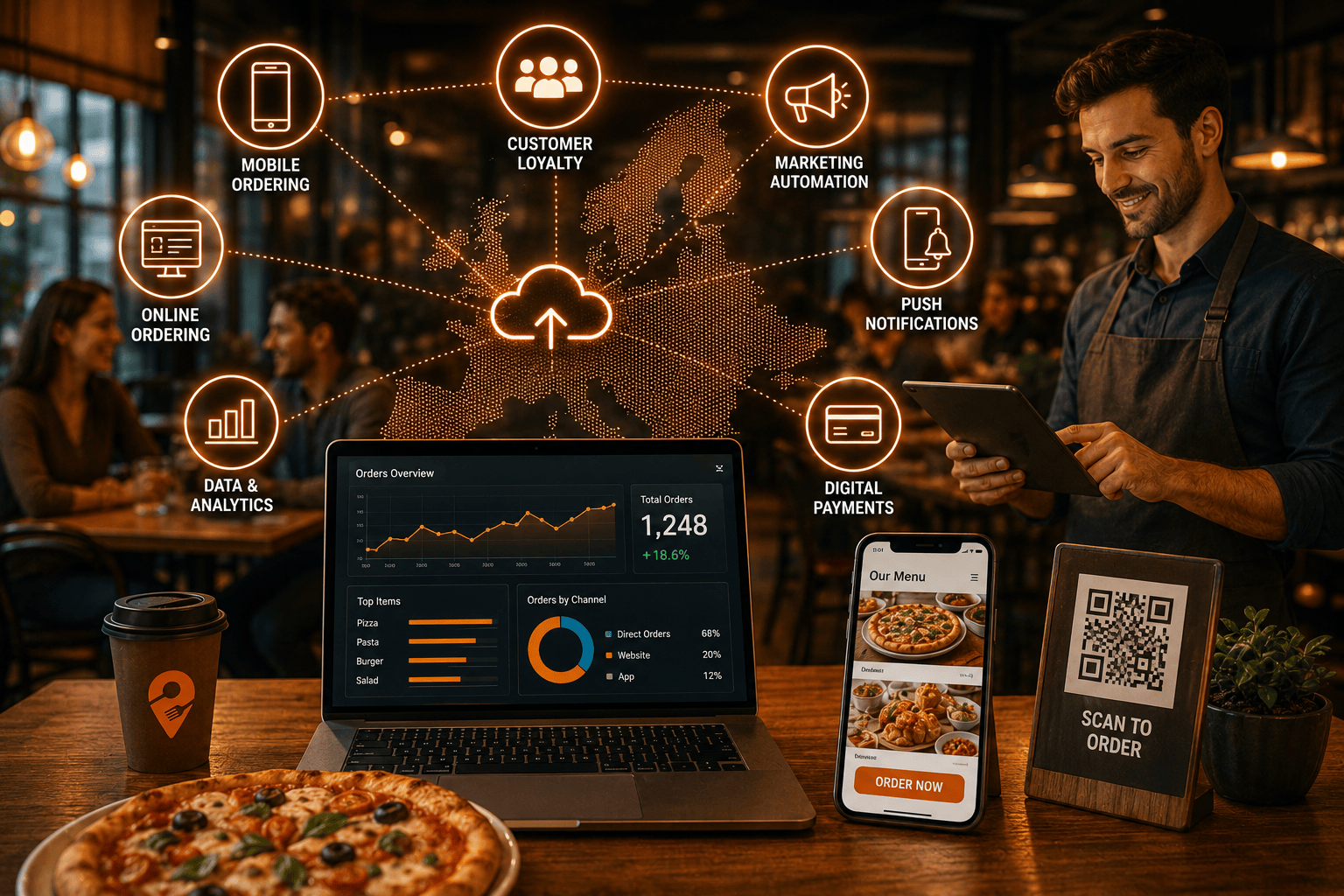
The growth of direct ordering is also connected to broader digital transformation.
Restaurants today are investing in:
- Online ordering systems
- Mobile-first experiences
- Loyalty programs
- Customer retention tools
- Marketing automation
Restaurant owners increasingly understand that digital infrastructure is just as important as physical infrastructure.
The restaurants that adapt fastest are often the ones that grow fastest.
Why Direct Ordering Works Particularly Well in Europe
European consumers often have strong loyalty toward local businesses.
Many customers prefer supporting:
- Independent restaurants
- Family-owned businesses
- Local food brands
When customers know that ordering directly helps restaurants retain more revenue, many are willing to change their habits.
This creates an ideal environment for direct ordering growth across Europe.
Restaurants gain more control.
Customers gain more transparency.
Everyone benefits.
The Hybrid Model Is Becoming the New Standard
It’s important to understand that direct ordering doesn’t necessarily replace delivery platforms.
Many successful restaurants now use a hybrid strategy.
They combine:
- Marketplace visibility
- Direct ordering channels
- Loyalty programs
- Social media marketing
- Customer retention initiatives
This approach provides the best of both worlds.
Restaurants can attract new customers through marketplaces while building long-term relationships through direct channels.
How FoodMato Supports Direct Ordering Growth
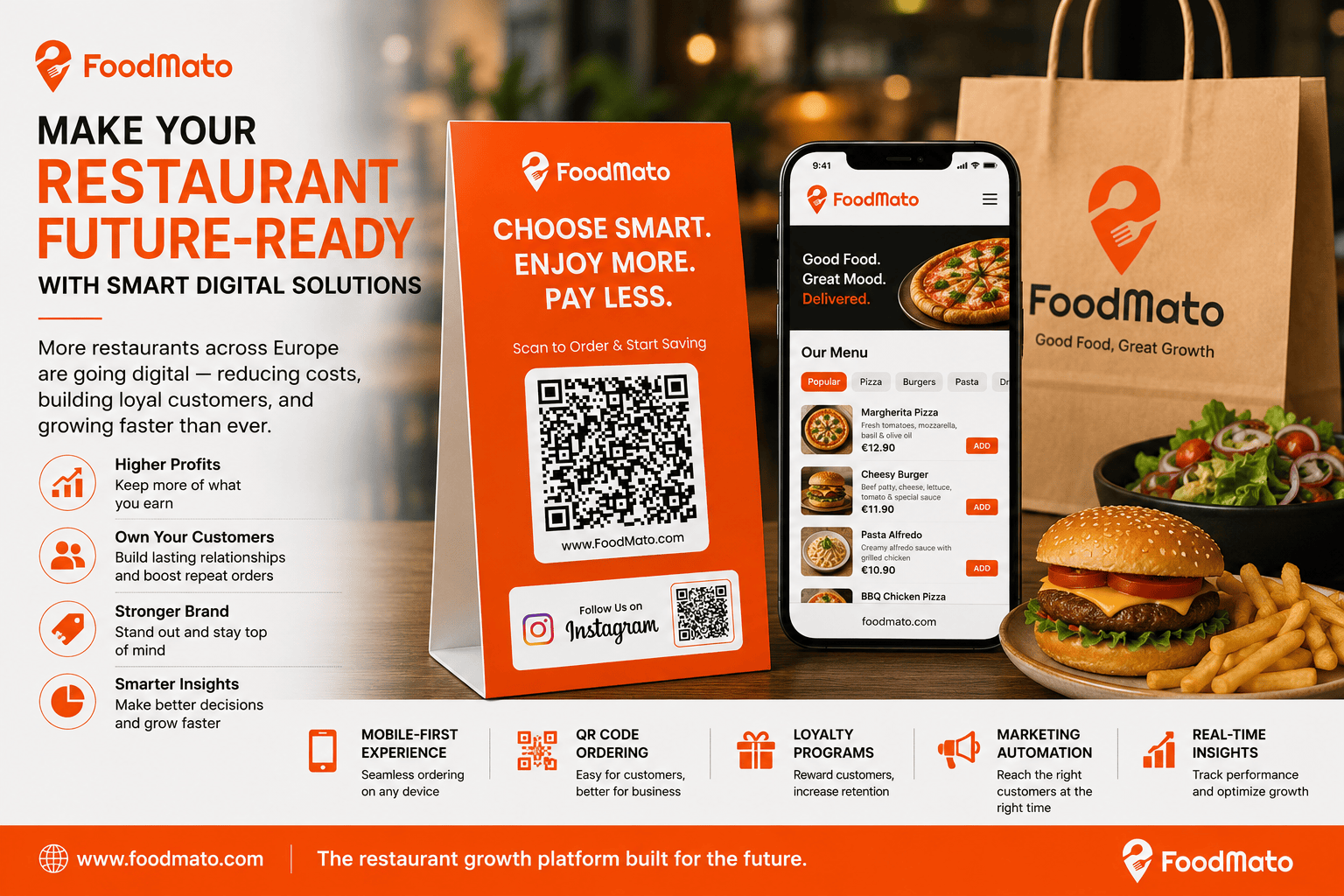
FoodMato believes restaurants should have more control over their growth.
That’s why the platform focuses on helping restaurants:
- Build stronger customer relationships
- Encourage repeat orders
- Improve customer retention
- Strengthen restaurant branding
- Reduce dependency on expensive ecosystems
Rather than focusing only on transactions, FoodMato focuses on sustainable restaurant growth.
For restaurant owners across Europe, this approach creates opportunities to build more profitable and resilient businesses.
What the Future Looks Like
The future of food ordering in Europe will likely be shaped by three key factors:
1. Customer Ownership
Restaurants want direct relationships with their customers.
2. Profitability
Businesses need healthier margins to grow sustainably.
3. Loyalty
Repeat customers will become more important than ever.
Direct ordering supports all three.
That’s why adoption continues to accelerate across Europe.
Final Thoughts
Direct ordering is growing across Europe because restaurants are becoming more strategic about growth.
They are looking beyond short-term order volume and focusing on long-term business health.
They want:
- Better margins
- Customer ownership
- Stronger brands
- More loyalty
- Sustainable growth
Simultaneously, customers are demanding greater transparency and more direct connections with the restaurants they love.
This combination is driving one of the biggest shifts in the European restaurant industry.
Direct ordering is no longer just an alternative.
It’s becoming an essential part of modern restaurant success.
Ready to Build Stronger Customer Relationships?
FoodMato helps restaurants across Europe increase customer retention, encourage repeat orders, and create sustainable growth through a restaurant-first approach.
Join FoodMato and start building a stronger future for your restaurant.
Discover more restaurants in Berlin on Foodmato | Explore more food stories at explore.foodmato.com