
The food delivery industry changed the restaurant business forever.
Online ordering made food more accessible, helped restaurants reach more customers, and created convenience that millions of people now depend on daily.
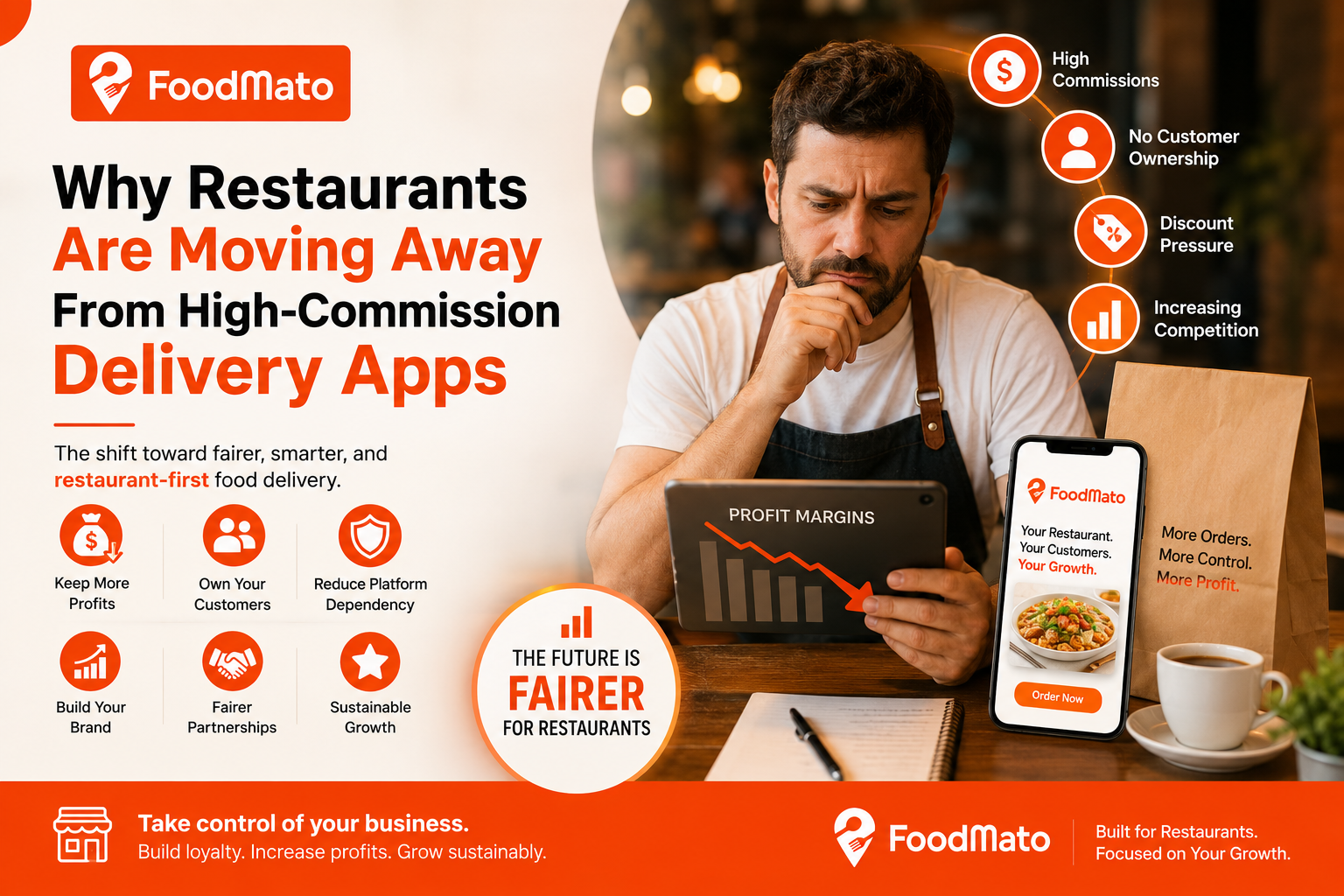
But behind the growth of major food delivery platforms, many restaurants are struggling with a serious problem:
High commission fees
For years, restaurants have depended on large aggregator platforms to attract customers online. While these platforms helped restaurants gain visibility, they also created a system where many restaurant owners feel trapped.
Today, thousands of restaurants worldwide are actively searching for alternatives to high-commission food delivery apps.
They want:
- Better profit margins
- More customer control
- Direct relationships with customers
- Fair partnerships
- Sustainable growth
- Lower operational pressure
This shift is becoming one of the biggest transformations in the food delivery industry.
In this article, we’ll explore:
- Why restaurants are moving away from high-commission platforms
- How commission-based systems affect restaurant profitability
- The hidden long-term problems of aggregator dependency
- Why direct ordering and restaurant-first ecosystems are growing rapidly
- How platforms like FoodMato are helping restaurants regain control
The Rise of Food Delivery Platforms
Food delivery apps changed customer behavior dramatically.
Customers can now:
- Order food within minutes
- Compare restaurants instantly
- Access discounts and offers
- Track deliveries in real time
- Explore new cuisines easily
For restaurants, these apps initially seemed like a perfect opportunity.
Delivery platforms promised:
- Increased visibility
- More customers
- Higher order volumes
- Marketing exposure
- Simplified logistics
And for many restaurants, the early growth was exciting.
However, as competition increased, restaurants started noticing a major issue:
The cost of visibility became extremely expensive.
The Problem With High Commission Food Delivery Apps
Most large food delivery platforms charge restaurants commissions on every order.
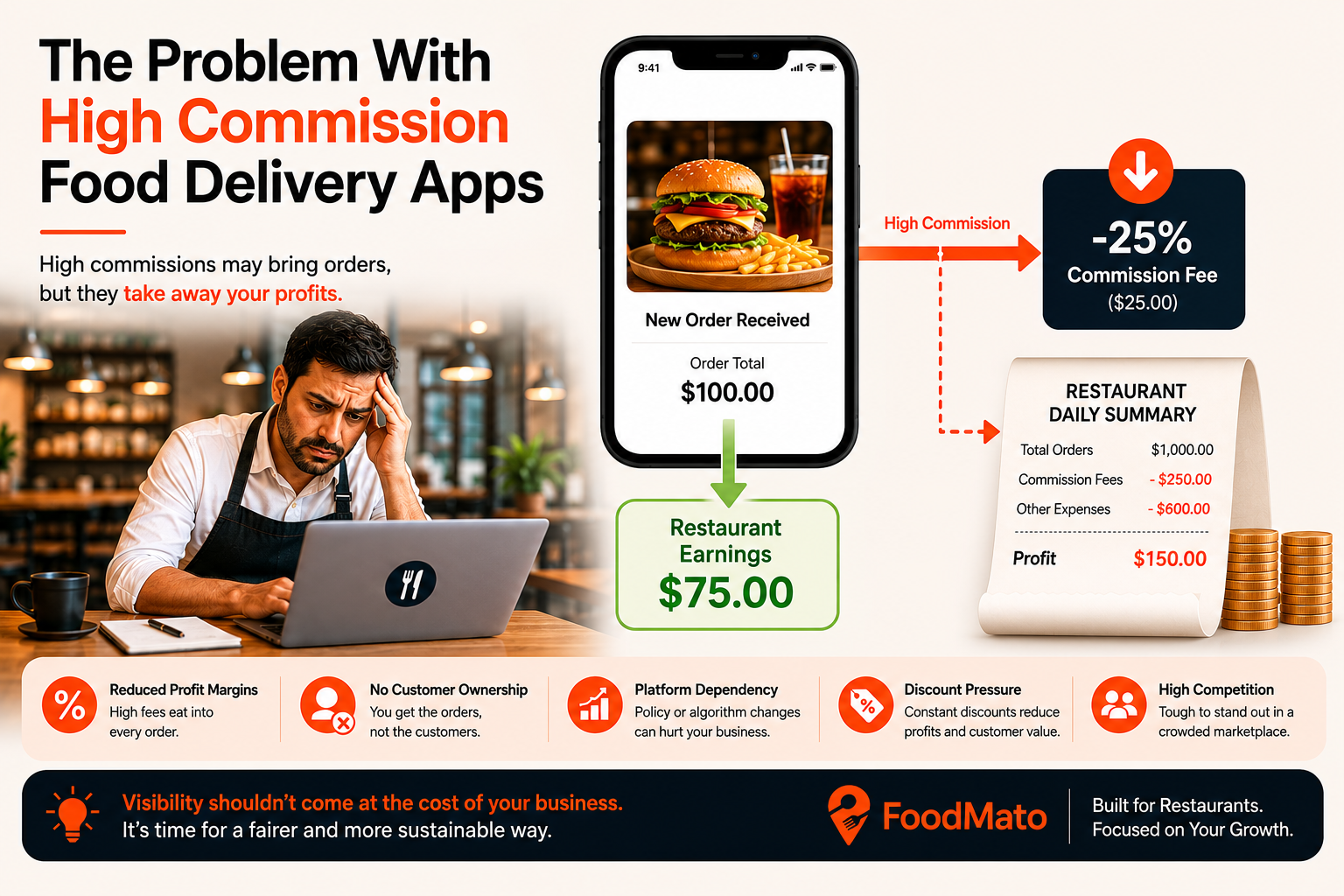
Depending on the platform, city, and agreement, restaurants may lose:
- 15%
- 20%
- 25%
- Sometimes even 30% or more
from every single order.
For restaurants already operating on tight margins, this creates massive financial pressure.
A restaurant’s costs already include:
- Ingredients
- Staff salaries
- Kitchen operations
- Packaging
- Rent
- Utilities
- Taxes
- Marketing
- Delivery handling
After all operational expenses, restaurant profit margins are often already thin.
Adding high commissions on top of these expenses can significantly reduce profitability.
Why High Commissions Hurt Restaurants
1. Reduced Profit Margins
Restaurants do not keep the full value of an online order.
When a large portion goes toward platform commissions, restaurants are forced to:
- Increase menu prices
- Reduce food quality
- Cut operational costs
- Depend on high order volume
- Run constant discounts
This creates an unhealthy cycle.
Instead of building sustainable businesses, many restaurants feel pressured to chase volume while earning less profit per order.
2. Restaurants Lose Customer Ownership
One of the biggest concerns restaurant owners now face is customer ownership.
On many aggregator apps:
- The platform owns customer data
- Restaurants have limited direct communication
- Repeat customers remain tied to the platform
- Restaurants struggle to build independent loyalty
This means restaurants may receive orders — but not long-term customer relationships.
That is a major difference.
A restaurant can have thousands of online orders and still struggle to build a loyal customer base outside the delivery app ecosystem.
3. Heavy Dependence on Aggregator Platforms
When restaurants become too dependent on one delivery app, they become vulnerable.
Changes in:
- commissions
- ranking algorithms
- visibility systems
- advertising costs
- discount structures
can immediately affect restaurant revenue.
Many restaurant owners feel they have little control over their own growth.
This dependence is one of the biggest reasons restaurants are now exploring alternative platforms and direct ordering systems.
4. Discount Pressure
Large delivery platforms often rely heavily on discounts and promotions.
While discounts may temporarily increase order volume, they can also create problems:
- Reduced profit margins
- Customer dependency on offers
- Lower perceived food value
- Unsustainable pricing expectations
Restaurants may feel forced to participate in discount wars simply to remain visible.
Over time, this becomes difficult to maintain.
5. Increased Competition Inside the Same Platform
Aggregator apps place restaurants side-by-side with competitors.
Customers can compare:
- Prices
- Delivery times
- Discounts
- Ratings
- Promotions
within seconds.
This often shifts customer focus away from brand loyalty and toward pricing competition.
Smaller restaurants especially struggle in this environment.
Without large advertising budgets, many independent restaurants become less visible over time.
Why Restaurants Are Looking for Alternatives
Restaurants are no longer only looking for online orders.
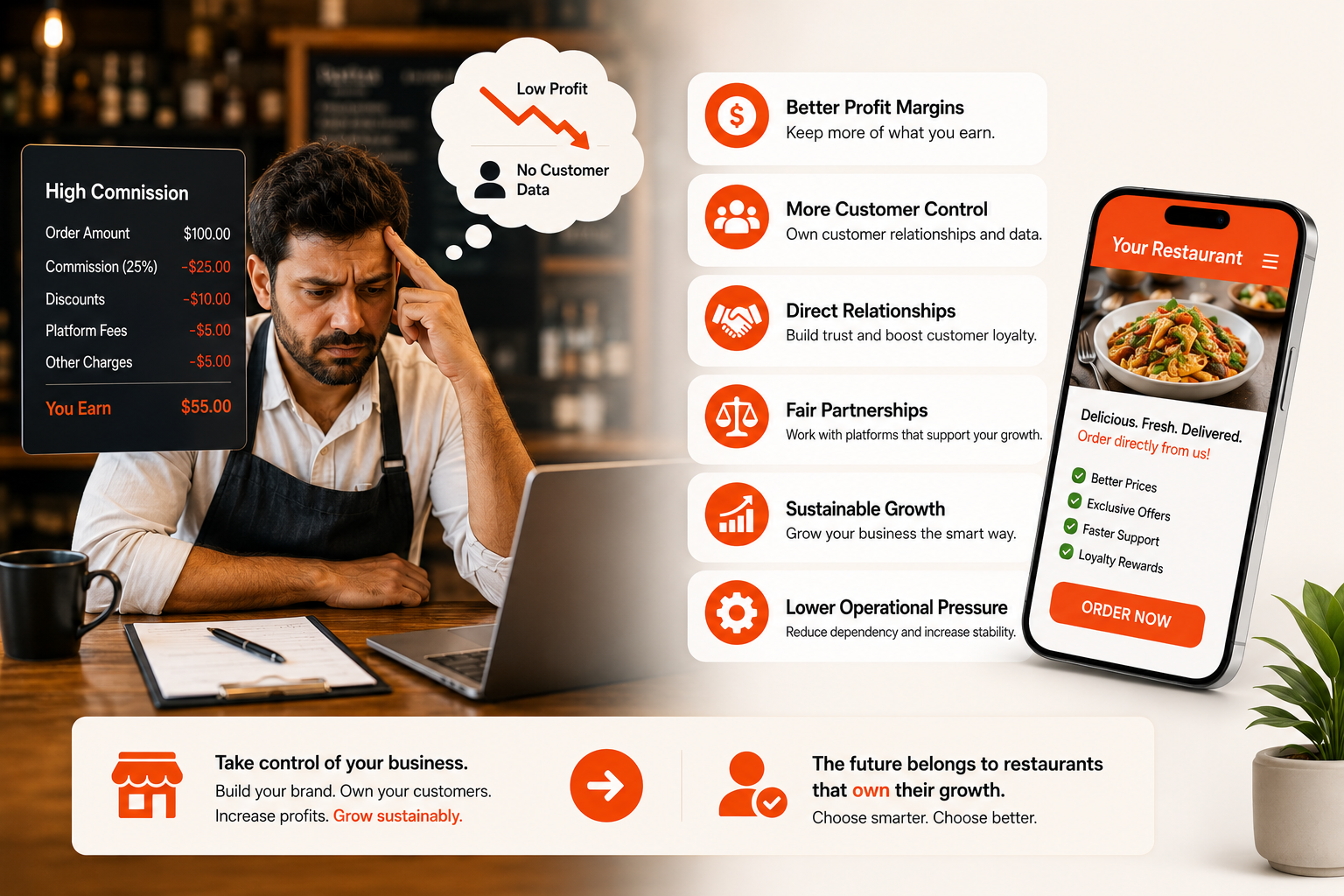
They are looking for:
- sustainable growth
- fair partnerships
- repeat customers
- direct branding opportunities
- better profit retention
- long-term business stability
The restaurant industry is beginning to understand an important lesson:
Visibility alone is not enough
Restaurants also need ownership, retention, and profitability.
That’s why many restaurants are now investing in:
- Direct ordering systems
- Restaurant websites
- Loyalty programs
- Customer retention tools
- Restaurant-first platforms
- White-label solutions
This shift is changing the future of online food ordering.
The Rise of Restaurant-First Platforms
A new generation of food delivery ecosystems is emerging.
Instead of focusing only on marketplace growth, these platforms focus on helping restaurants:
- keep more profits
- build stronger brands
- own customer relationships
- increase repeat orders
- reduce dependency on aggregators
This approach is becoming increasingly attractive for independent restaurants and cloud kitchens.
Restaurant owners want platforms that act like partners — not just intermediaries.
How FoodMato Supports Restaurants Differently
Foodmato is built around a restaurant-first philosophy.
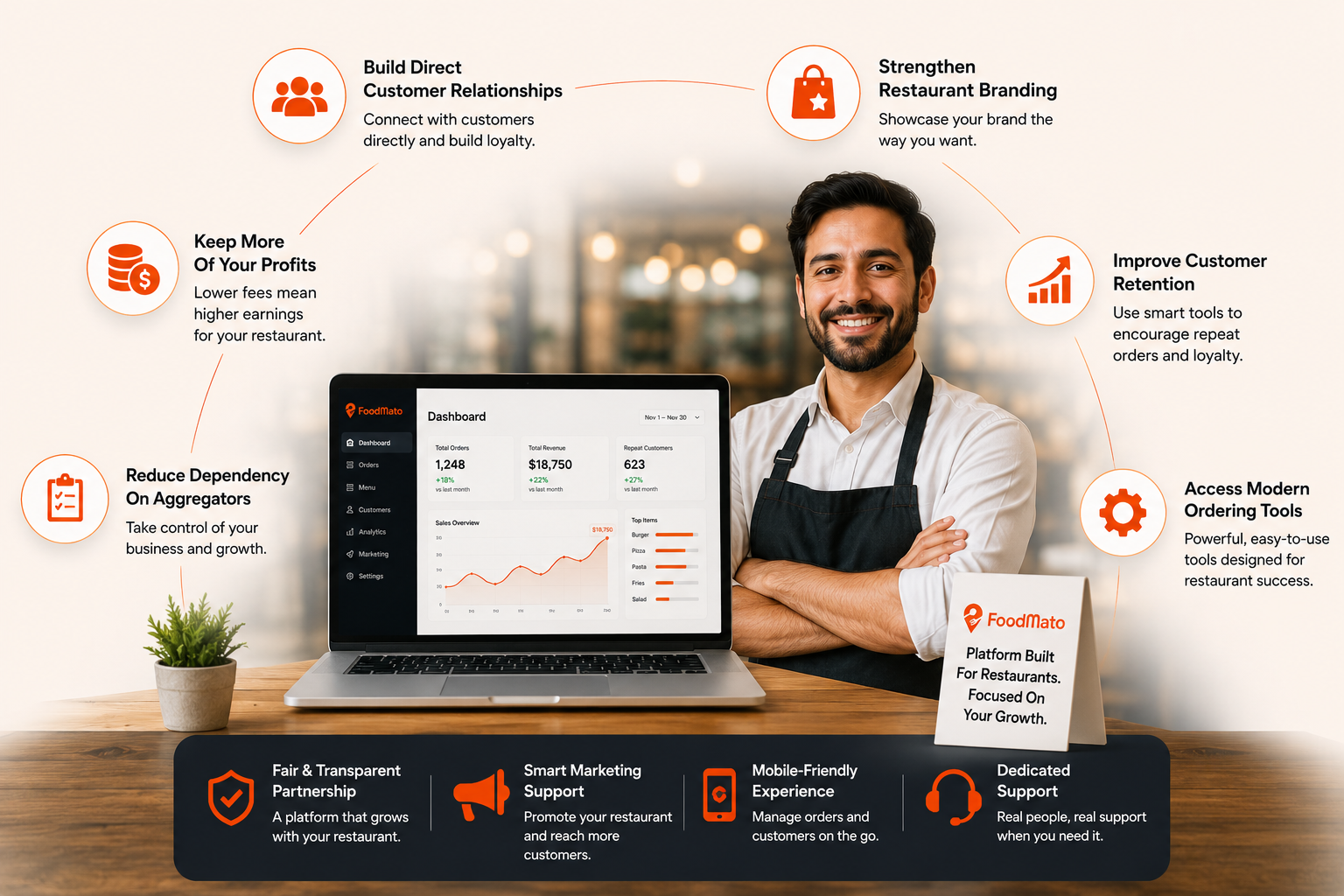
Instead of treating restaurants as replaceable listings in a marketplace, FoodMato focuses on helping restaurants grow sustainably.
FoodMato aims to help restaurants:
- Build direct customer relationships
- Improve customer retention
- Strengthen restaurant branding
- Reduce dependency on high-commission ecosystems
- Create better long-term profitability
- Access modern online ordering tools
This approach aligns with the growing demand for fairer food delivery ecosystems.
Why Customer Ownership Matters So Much
One of the biggest long-term advantages for restaurants is customer ownership.
When restaurants can directly connect with customers, they can:
- Encourage repeat orders
- Build loyalty programs
- Send personalized offers
- Strengthen customer relationships
- Increase lifetime customer value
Repeat customers are often far more profitable than constantly acquiring new customers.
That is why customer retention is becoming one of the most important priorities for modern restaurants.
The Future of Food Delivery Is Changing
The food delivery industry is evolving.
Restaurants are becoming more aware of:
- operational costs
- commission structures
- customer ownership
- branding importance
- retention strategies
- platform dependency risks
Instead of relying completely on large aggregators, many restaurants are now creating balanced strategies that include:
- marketplace visibility
- direct ordering
- social media marketing
- customer loyalty systems
- restaurant-owned digital channels
This hybrid approach gives restaurants greater stability and long-term growth potential.
What Restaurant Owners Should Focus On in 2026
Restaurants that want sustainable growth should prioritize:
1. Customer Retention
Repeat customers are more valuable than one-time orders.
2. Brand Building
Strong restaurant branding creates customer loyalty.
3. Direct Relationships
Restaurants should build communication channels with customers.
4. Operational Profitability
Growth without profit is difficult to sustain.
5. Diversification
Restaurants should avoid depending completely on a single platform.
Why This Industry Shift Matters
The shift away from high-commission food delivery apps is not just about money.
It reflects a larger change in how restaurants think about growth.
Restaurants want:
- more control
- better margins
- sustainable systems
- transparent partnerships
- long-term customer relationships
The future of food delivery may not belong only to the biggest platforms.
It may belong to platforms that help restaurants truly grow.
Final Thoughts
Food delivery apps created enormous opportunities for restaurants.
But over time, many restaurant owners realized that visibility alone does not guarantee profitability or long-term success.
High commissions, customer ownership issues, discount dependency, and platform reliance have pushed many restaurants to explore better alternatives.
The industry is now moving toward a more balanced future — one where restaurants want both online reach and business control.
Platforms like FoodMato represent this growing shift toward restaurant-first ecosystems.
As the industry evolves, restaurants that focus on ownership, loyalty, profitability, and customer relationships will likely be in a much stronger position for long-term success.
Ready to Grow Your Restaurant With More Control?
FoodMato helps restaurants build stronger customer relationships, improve retention, and grow online with a restaurant-first approach.
Start building a more sustainable restaurant business today with FoodMato.
Discover more restaurants in Berlin on Foodmato | Explore more food stories at explore.foodmato.com