A few years ago, ordering food online felt simple.
You opened an app, selected your favorite restaurant, paid a reasonable price, and your meal arrived at your doorstep.
Today, many customers across Europe are asking a completely different question:
“Why is food delivery suddenly so expensive?”
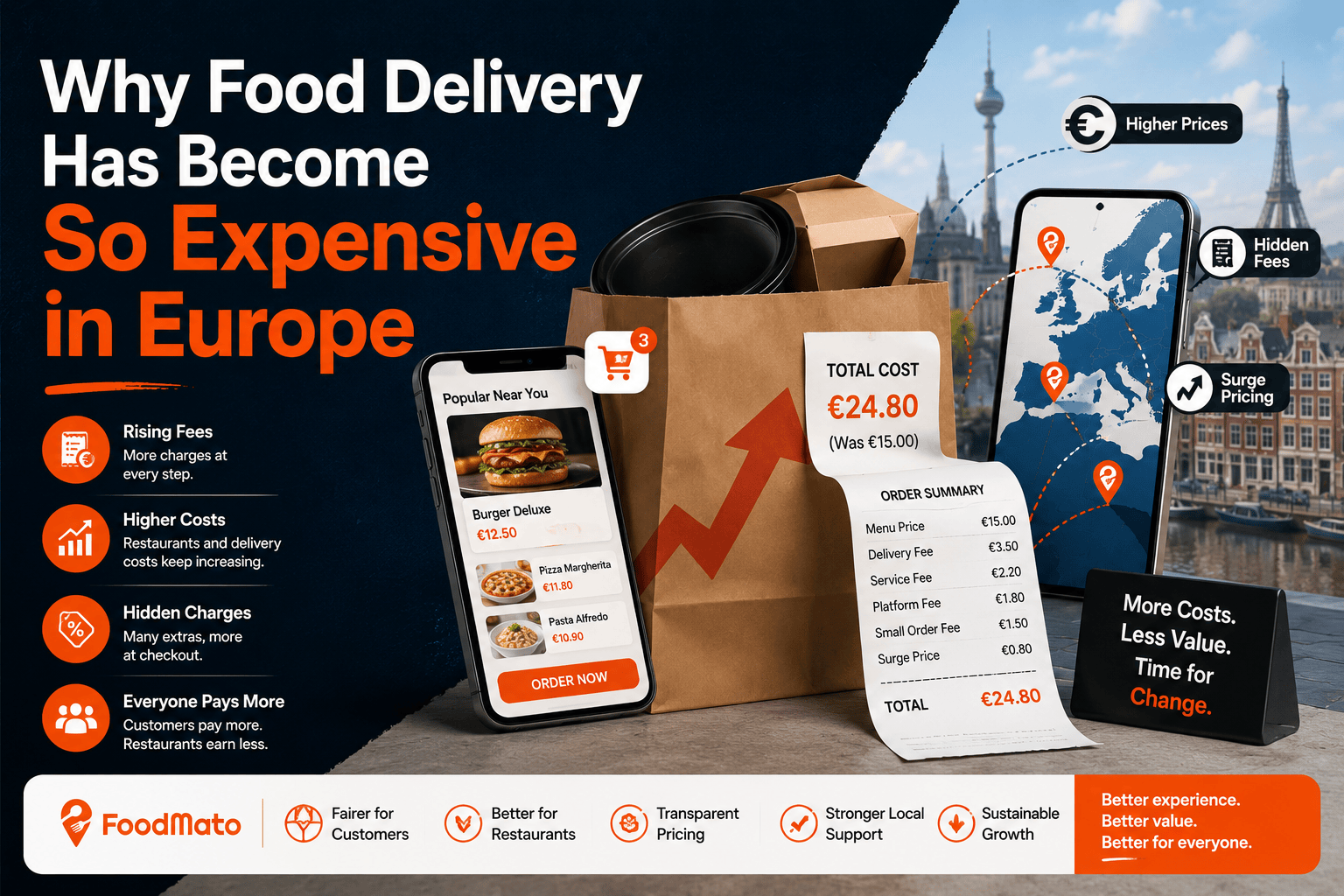
From Berlin to Paris, Amsterdam to Munich, customers are increasingly frustrated by:
- Inflated menu prices
- Delivery charges
- Service fees
- Small order fees
- Hidden costs
- Aggressive pricing during peak hours
For many people, ordering food online now feels significantly more expensive than dining in or ordering directly from restaurants.
Simultaneously, restaurants themselves are also struggling with rising costs and shrinking margins.
This is creating a growing disconnect between:
- Customers paying more
- Restaurants earning less
- Delivery platforms taking larger percentages
So what is really happening inside the food delivery industry?
Moreover, why are more customers and restaurants across Europe looking for better alternatives?
Let’s break it down.
Food Delivery Was Built on Convenience
Food delivery apps became popular because they solved a real problem: convenience.
Customers could:
- Order food instantly
- Avoid waiting on calls
- Discover nearby restaurants
- Track deliveries live
- Pay digitally
For restaurants, delivery apps have been created:
- Online visibility
- Access to new customers
- Simplified ordering systems
The convenience economy grew rapidly across Europe, especially after the pandemic accelerated digital ordering behavior.
But convenience came with a hidden cost.
Over time, food delivery platforms became increasingly expensive for both restaurants and customers.
Why Customers Are Paying More Today
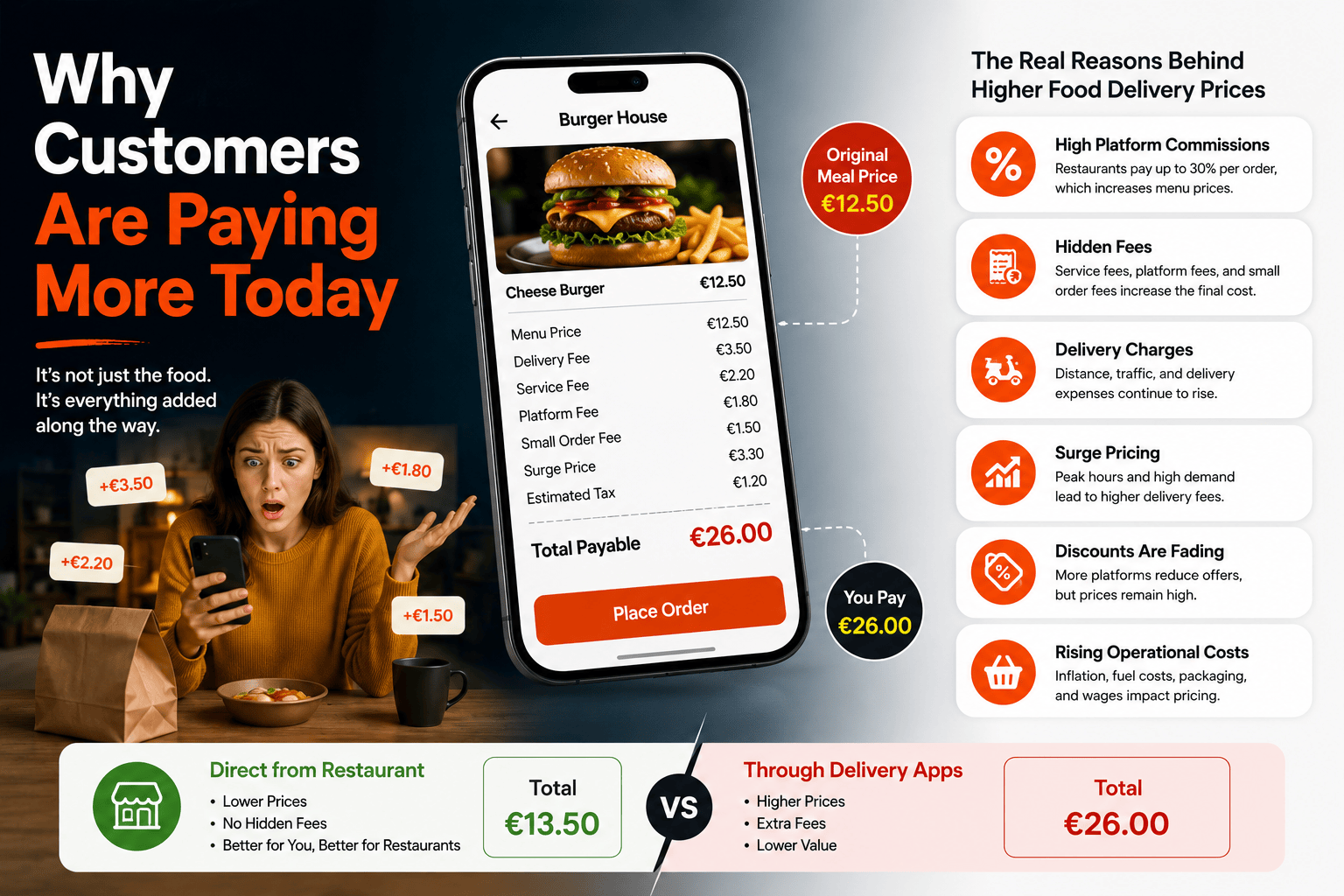
Many customers notice that the same meal often costs more on delivery apps than it does inside the restaurant.
That’s not just a feeling.
There are several reasons why food delivery prices have increased across Europe.
1. High Platform Commissions
One of the biggest reasons behind higher food prices is restaurant commission fees.
Many delivery platforms charge restaurants between:
- 15%
- 20%
- sometimes 30% or more
Per order.
Restaurants already operate with thin margins.
When platforms take a large percentage from every sale, restaurants often increase menu prices on delivery apps to protect profitability.
This means customers indirectly pay for platform commissions.
Often:
- The burger costs more
- Pizza costs more
- Drinks cost more
Even before additional fees are added.
2. Hidden Fees Keep Increasing
Customers across Europe are becoming frustrated with hidden charges added during checkout.
Many delivery apps now include:
- Service fees
- Platform fees
- Delivery charges
- Minimum order fees
- Surge pricing
- Small basket fees
Sometimes a €15 meal can quickly become €25 after all charges are added.
This creates frustration because the final price often feels disparate from the price customers initially saw while browsing.
Transparency is becoming one of the biggest concerns in the delivery industry.
3. Discount Culture Changed Customer Expectations
For years, delivery apps have heavily promoted:
- Discount coupons
- Free delivery offers
- Cashback campaigns
- Promotional pricing
Customers became used to constant offers.
But aggressive discounting is difficult to sustain long term.
Eventually, many platforms reduced discounts or shifted costs back toward restaurants and customers.
Now customers often feel:
- Prices are higher
- Offers are weaker
- Value is lower
Than before.
4. Rising Costs Across Europe
The increase in food delivery pricing is also connected to broader economic pressure.
Restaurants across Europe are dealing with:
- Inflation
- Rising energy costs
- Increasing ingredient prices
- Higher wages
- Supply chain costs
Delivery platforms also face:
- Logistics expenses
- Driver costs
- Operational scaling pressure
All of these factors affect final customer pricing.
However, customers often only see the result: more expensive food.
Customers Are Starting to Notice the Difference
Across Europe, more customers are beginning to compare:
- Delivery app prices
- Restaurant direct ordering prices
- Dine-in prices
Moreover, many are realizing that ordering directly from restaurants is sometimes significantly cheaper.
This is changing customer behavior.
People increasingly want:
- Transparent pricing
- Fewer hidden charges
- Better value
- Direct restaurant support
- More honest delivery experiences
Trust is becoming an important factor in food delivery decisions.
Restaurants Are Also Under Pressure
What makes the situation even more surprising is this:
Even though customers are paying more, many restaurants are not earning significantly higher profits.
Restaurants still lose large percentages through:
- Commissions
- Discounts
- Paid visibility campaigns
- Operational delivery costs
This creates a difficult ecosystem where:
- Customers feel overcharged
- Restaurants feel underpaid
- Platforms control most customer relationships
That imbalance is pushing many restaurants to rethink their delivery strategies.
Why Direct Ordering Is Growing Across Europe
Many restaurants are now encouraging customers to order directly whenever possible.
Direct ordering helps restaurants:
- Reduce dependency on high commissions
- Build direct customer relationships
- Improve repeat orders
- Offer better pricing
- Strengthen customer loyalty
Simultaneously, customers often receive:
- Fairer pricing
- Better deals
- More personalized experiences
This shift toward restaurant-first ordering systems is growing rapidly in cities across Europe.
The Need for Fairer Food Delivery Platforms
The food delivery industry is entering a new phase.
Customers no longer care only about convenience.
They also care about:
- Transparency
- Value
- Fairness
- Supporting local restaurants
Restaurants want:
- Sustainable growth
- Better customer ownership
- Healthier profit margins
- Less dependency on aggregator systems
This is creating demand for more balanced delivery ecosystems.
How FoodMato Takes a Different Approach
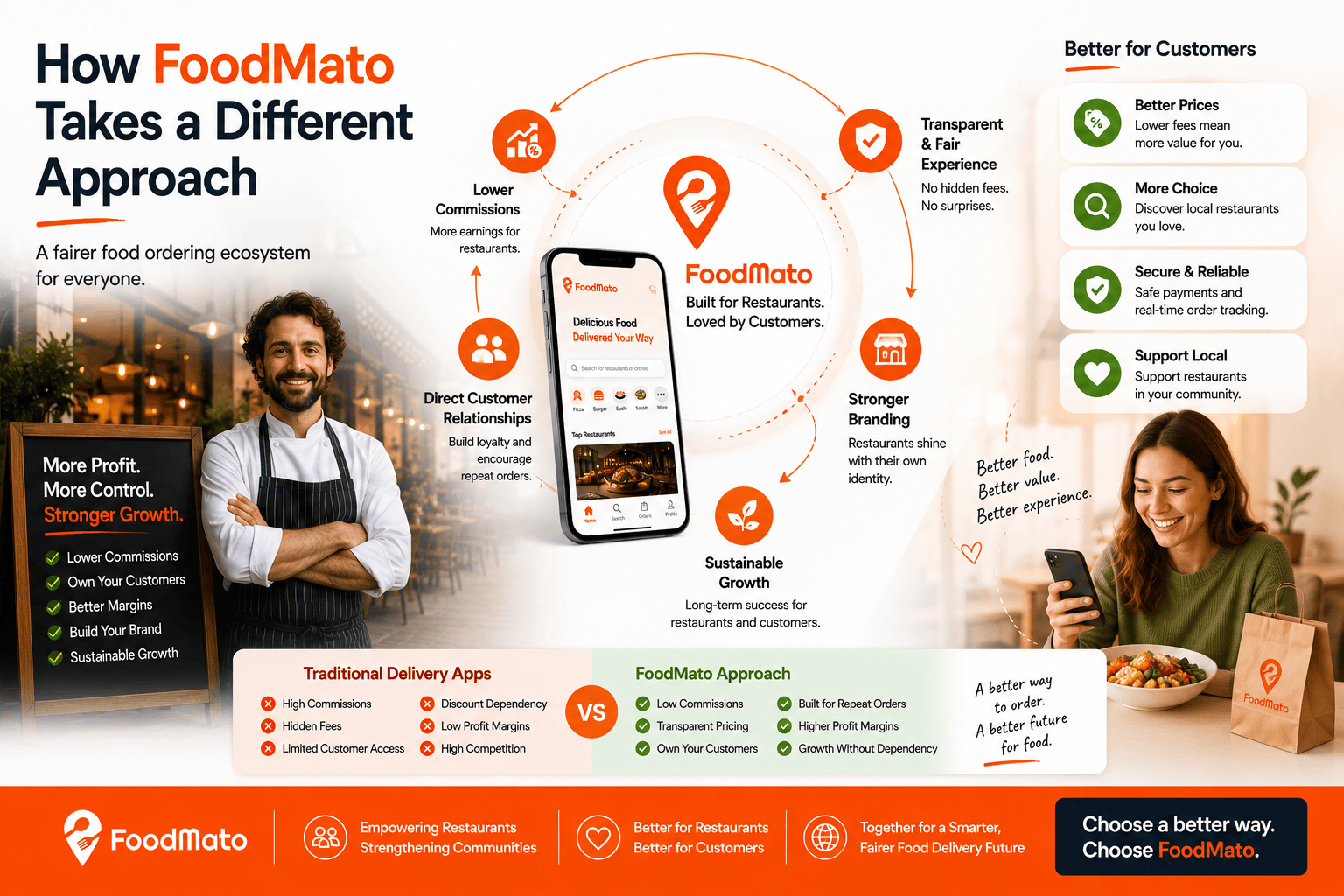
Foodmato was built around a simple idea:
Food delivery should work better for both restaurants and customers
Instead of focusing only on transactions, FoodMato focuses on creating a fairer ordering experience.
The platform aims to support:
- Better restaurant profitability
- Stronger customer relationships
- Transparent experiences
- Customer loyalty
- Sustainable restaurant growth
For customers, that means a more modern and value-focused ordering experience.
For restaurants, it means a stronger opportunity to grow without losing control of their business.
Why This Shift Matters
Food delivery is no longer just about speed.
The future of the industry will likely depend on:
- Trust
- Transparency
- Customer loyalty
- Sustainable economics
- Fair restaurant partnerships
Customers are becoming smarter about pricing.
Restaurants are becoming smarter about profitability.
Also, platforms that ignore these changes may struggle to maintain long-term trust.
Final Thoughts
Food delivery apps changed how Europe orders food, but the industry is now facing growing pressure from both customers and restaurants.
Hidden charges, inflated pricing, and rising operational costs are making many people question the current delivery ecosystem.
Customers want better value.
Restaurants want better margins.
That’s why restaurant-first and transparency-focused platforms are becoming increasingly important.
The next generation of food delivery platforms will not win only through convenience.
They will win through:
- Trust
- Fairness
- Transparency
- Customer experience
- Sustainable restaurant growth
And that’s exactly where platforms like FoodMato are positioning themselves for the future.
Looking for a Smarter Food Ordering Experience?
FoodMato helps customers discover great restaurants while supporting fairer and more sustainable food delivery systems.
Experience the next generation of food ordering with FoodMato today.
Discover more restaurants in Berlin on Foodmato | Explore more food stories at explore.foodmato.com