The food delivery market in Germany has experienced explosive growth over the past few years. Customers now expect the convenience of instant online ordering, real-time tracking of their food, and easy access to restaurants through their smartphones.
These digital changes opened up enormous possibilities for restaurant businesses. Online delivery platforms gave them access to wider customer bases and increased visibility in major cities like Berlin, Munich, Hamburg, and Frankfurt.
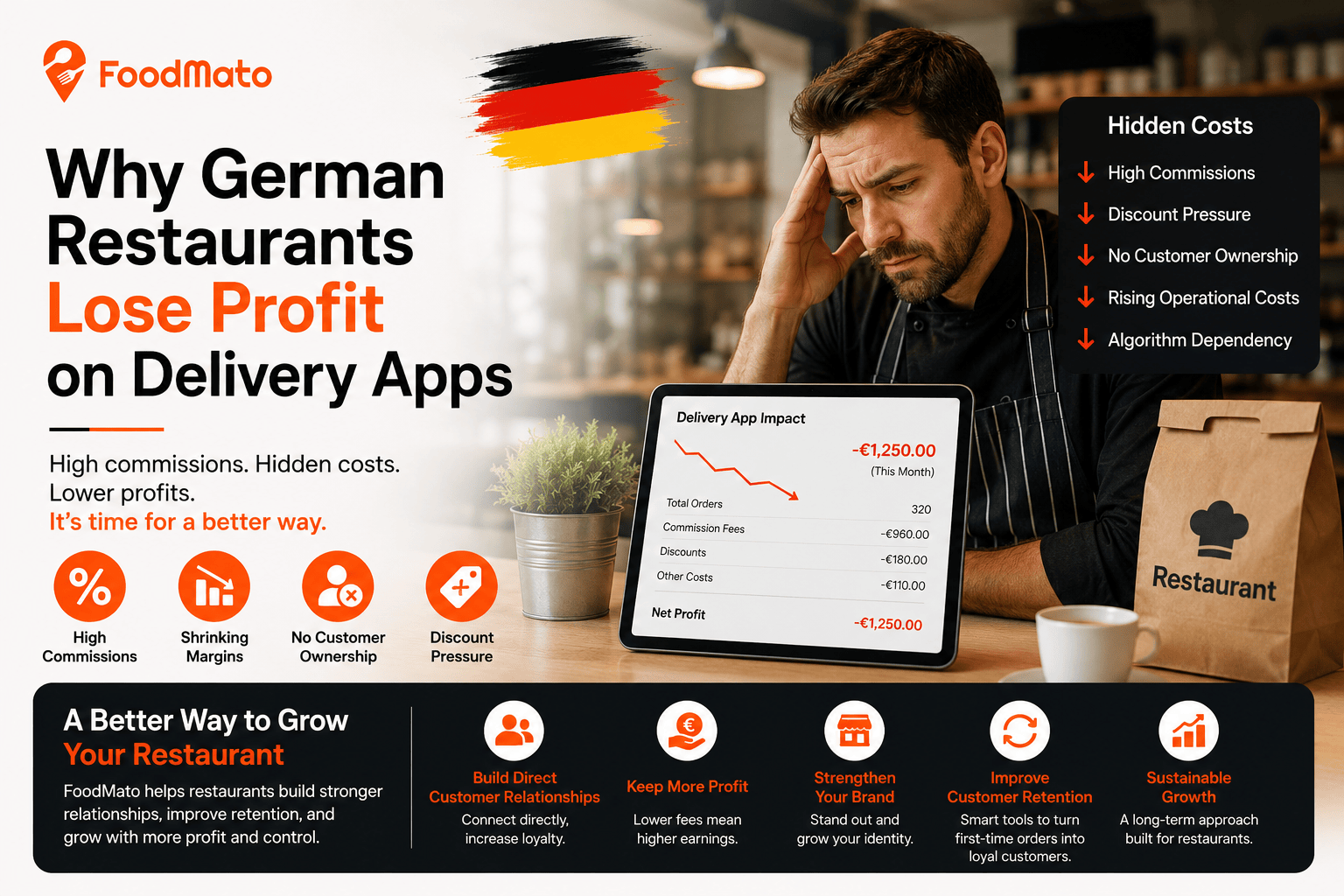
However, amidst the success of the food delivery app revolution, many restaurant owners in Germany are facing a stark reality:
Their profit margins are shrinking.
While delivery platforms are the conduits for online orders, they also bring with them hefty commissions, pricing pressures, and a reliance on third parties that eat into restaurant profits.
The question on the lips of many German restaurant owners is becoming increasingly pressing:
Are delivery apps really growing restaurants – or undermining long-term profitability?
This article dives into why restaurants are losing money on delivery apps and why many are now seeking out more sustainable solutions.
The Nitty-Gritty of Food Delivery Economics
At first glance, food delivery platforms seem like a win-win for restaurants:
- Offer online visibility
- Provide access to new customers
- Give restaurants digital ordering systems
- Bring delivery infrastructure
- Deliver marketplace traffic
But eventually, restaurant owners discover that simply increasing online order volume doesn’t necessarily lead to greater profits. Restaurants already operate with significant costs, such as:
- Rent and utilities
- Staff salaries
- Ingredients and inventory
- Kitchen operations
- Packaging
- Taxes
- General operational expenses
When a large percentage of the order value is deducted for delivery app commissions, profit margins for the restaurant become even slimmer.
How Much Are Delivery Apps Really Costing Restaurants?
Most European delivery platforms charge restaurants between 15% and 30% in commission on every single order. In competitive cities, restaurants may also spend extra on:
- Promoted listings
- Advertising campaigns
- Discounts
- Preferred placement
This creates a situation where restaurants might be serving more customers than ever before but taking home a smaller share of the revenue.
For example:
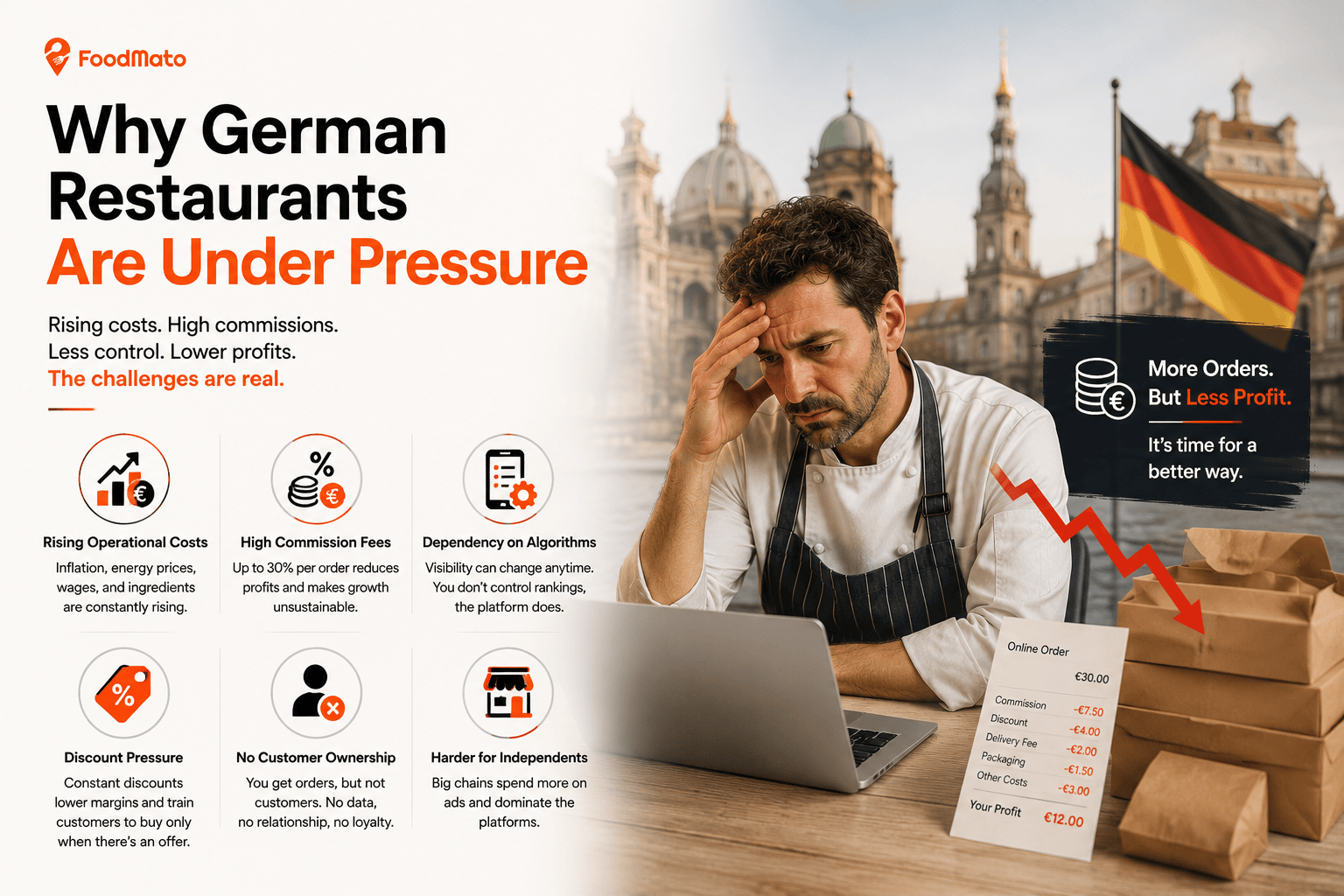
If a restaurant receives a 30 order and the cost includes:
- Platform commission
- Contribution to a discount
- Packaging
- Operational expenses
- The remaining profit for the restaurant can be extremely low.
The harsh truth for many German restaurateurs is:
More sales does not always equal a more profitable business.
Why German Restaurants Are Under Pressure
1. Rising Operational Costs
Restaurant owners in Germany are already struggling with increasing operational costs due to:
- Inflation
- Higher energy prices
- Labor shortages
- Rising food supply costs
- Wage increases
Adding high delivery app commissions on top of these existing burdens makes it incredibly difficult for independent restaurants to stay profitable. As a result, restaurants are often forced to:
- Raise their menu prices
- Accept even tighter profit margins
- Reduce other operational costs
- Rely heavily on maintaining a high volume of orders
This creates a recipe for instability in the long run.
2. Dependency on Marketplace Algorithms
Many restaurants become heavily reliant on delivery apps for their customer base. However, visibility within these platforms is often fleeting. A restaurant’s ranking can change based on:
- Paid advertising
- Algorithm changes
- Offered discounts
- Delivery speed
- Advertising spend
This leaves restaurants with little control over how they acquire customers. They can invest years honing their food quality and service, only to see their visibility in crowded marketplaces diminish due to forces beyond their control.
3. The Detrimental Effect of Discount Culture
One of the biggest issues facing the delivery industry is the constant need for discounts. Customers are bombarded with:
- Coupon codes
- Free delivery offers
- Percentage-off deals
- Special promotions
While discounts can boost short-term sales, they erode long-term profitability. Restaurants often feel pressured to participate in these promotions just to stay competitive. Over time, this leads to:
- Lower profit margins
- Reduced pricing power
- Customers who are loyal to offers rather than the restaurant’s brand
4. Restaurants Don’t Truly Own Their Customers
A fundamental issue with many traditional delivery platforms is the lack of customer ownership Often:
- Customer data belongs to the platform
- Restaurants have minimal direct interaction with their customers
- Repeat customers remain tied to the app ecosystem
This means restaurants receive transactions, but not lasting customer relationships. For sustainable growth, restaurants need:
- Repeat customers
- Direct engagement
- Loyalty programs
- Customer retention strategies
Without direct customer ownership, restaurants remain dependent on third-party platforms for repeat business.
Independent Restaurants Are Most Affected
Large restaurant chains often have the financial resources, marketing budgets, and operational scale to absorb high commissions. Independent restaurants in Germany typically operate on much tighter margins, making them more vulnerable to:
- High commissions
- Discount pressures
- Increased advertising costs
- Intense marketplace competition
Smaller restaurants struggle to compete with the dominance of chains within delivery apps, making it increasingly difficult to maintain profitability.
The Movement Towards Sustainable Restaurant Growth
The European restaurant industry is experiencing a significant shift towards:
- Profitability
- Customer retention
- Direct ordering
- Long-term brand development
- Operational independence
Instead of relying solely on aggregator platforms, many restaurants are adopting hybrid growth strategies that incorporate:
- Direct ordering systems
- Loyalty programs
- Social media marketing
- Restaurant-controlled customer communication channels
- Alternative delivery networks
This approach helps restaurants reduce their reliance on external platforms while building a stronger business for the future.
Why Direct Ordering Is Growing in Germany
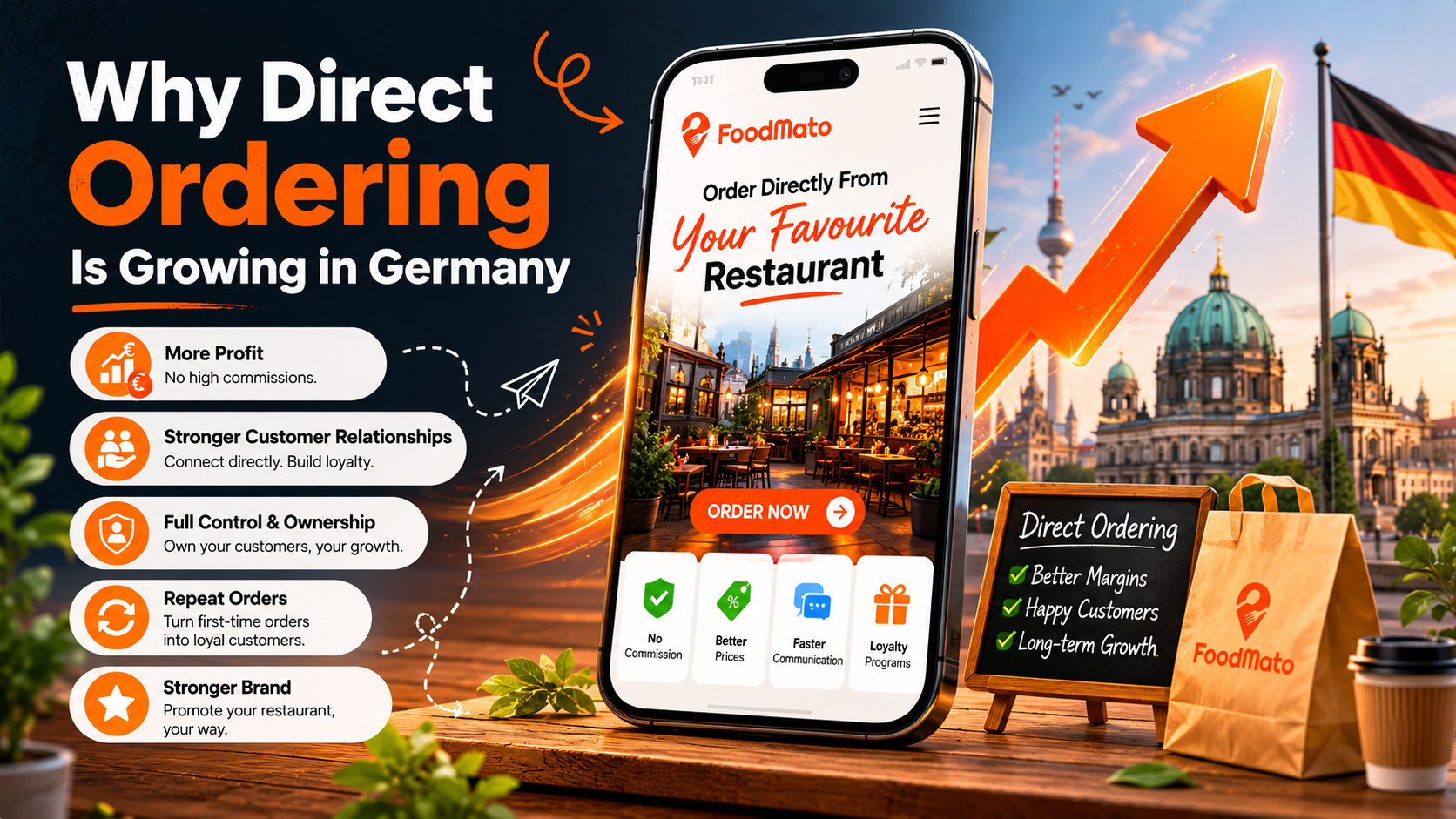
Direct ordering enables restaurants to foster stronger customer relationships outside of crowded marketplaces. With direct ordering systems, restaurants can:
- Increase repeat business
- Eliminate commission fees
- Cultivate customer loyalty
- Strengthen their brand
- Boost long-term profitability
This trend is rapidly gaining traction across Europe as restaurants seek more sustainable business models and prioritize customer retention over sheer marketplace visibility.
How FoodMato Supports Restaurants Differently
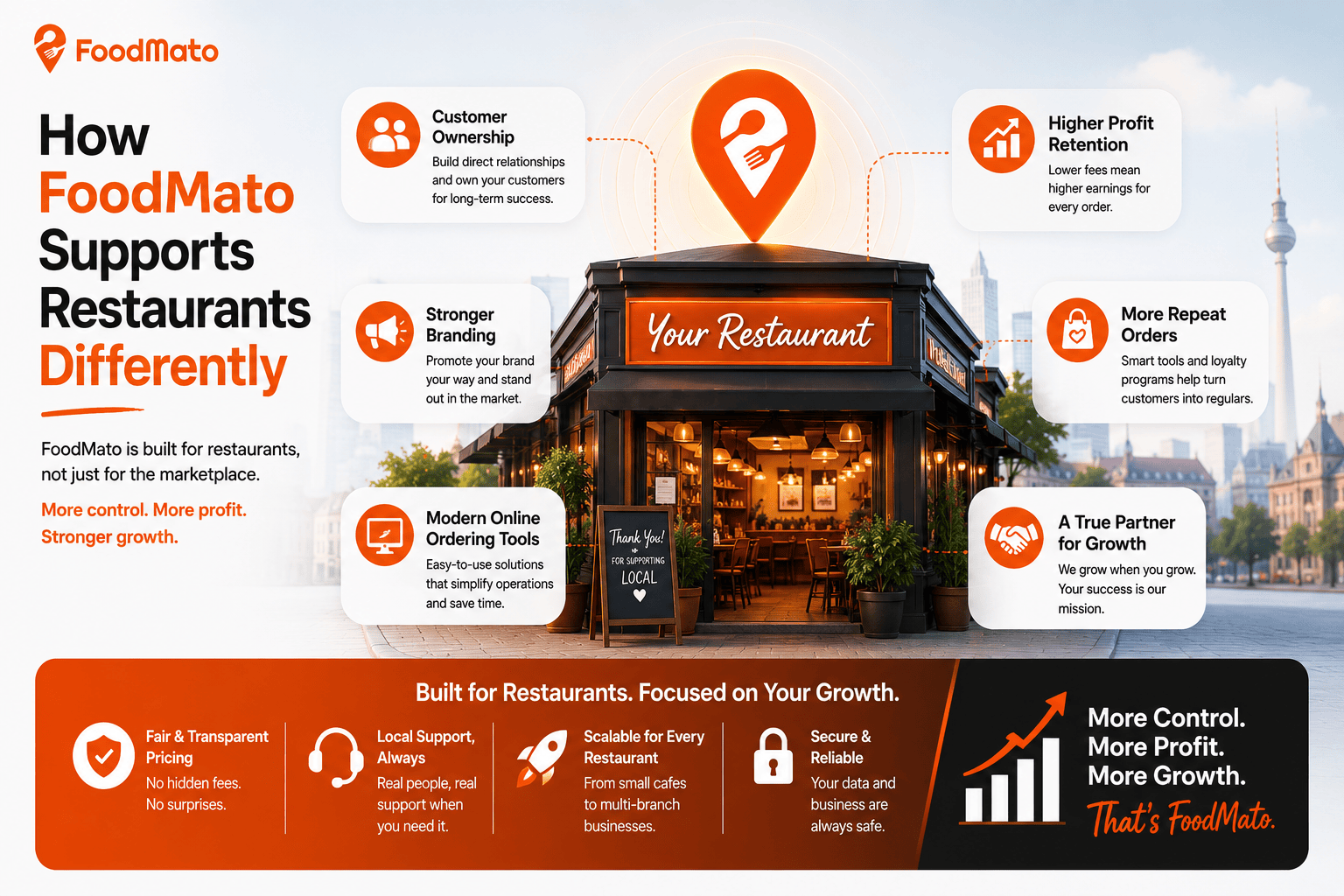
Foodmato is built on a restaurant-first philosophy that empowers restaurants to grow more sustainably. Rather than viewing restaurants as mere listings on a platform, FoodMato focuses on:
- Customer retention
- Restaurant branding
- Direct customer engagement
- Repeat orders
- Sustainable online growth
This model helps restaurants move beyond chasing short-term order volume and build a stable and profitable business. For German restaurants, FoodMato offers a way to build a strong digital presence without being beholden to high-commission ecosystems.
The Future of Food Delivery in Germany
The food delivery market in Germany will continue to expand, but restaurants are becoming more discerning about the platforms they partner with. Restaurant owners are demanding:
- Fair partnerships
- Transparent pricing
- Better customer ownership
- Sustainable growth strategies
- Greater control over their businesses
The future of food delivery may not solely belong to the largest apps; it may also be shaped by platforms that truly help restaurants become more profitable and loyal to their customers.
Final Thoughts
Food delivery apps have revolutionized the restaurant industry in Germany, but they have also brought new financial challenges. High commissions, discounts, customer ownership issues, and increasing operational costs are forcing many restaurants to re-evaluate their digital strategies.
Restaurants are no longer just seeking visibility; they are looking for:
- Profitability
- Independence
- Loyalty
- Sustainability
- Long-term growth
This is precisely the kind of demand that platforms like FoodMato aim to meet. As the food delivery landscape continues to evolve in Europe, restaurants that prioritize customer relationships and operational control are poised for stronger and more profitable businesses in the coming years.
Looking for a Smarter Restaurant Growth Platform?
FoodMato empowers restaurants to grow with a restaurant-first approach focused on profitability, customer retention, and long-term success. Start building a stronger restaurant business with FoodMato today.
Discover more restaurants in Berlin on Foodmato | Explore more food stories at explore.foodmato.com