

Following restaurant sustainability practices allows you to show your support and care for the environment. Due to the growing climate crisis, maintaining sustainability has become essential in every sector, including restaurants. They not only help you preserve the environment but also save money in the long run. Moreover, customers, being aware of the harmful effects of climate change on Earth, also prefer restaurants that follow sustainable practices.
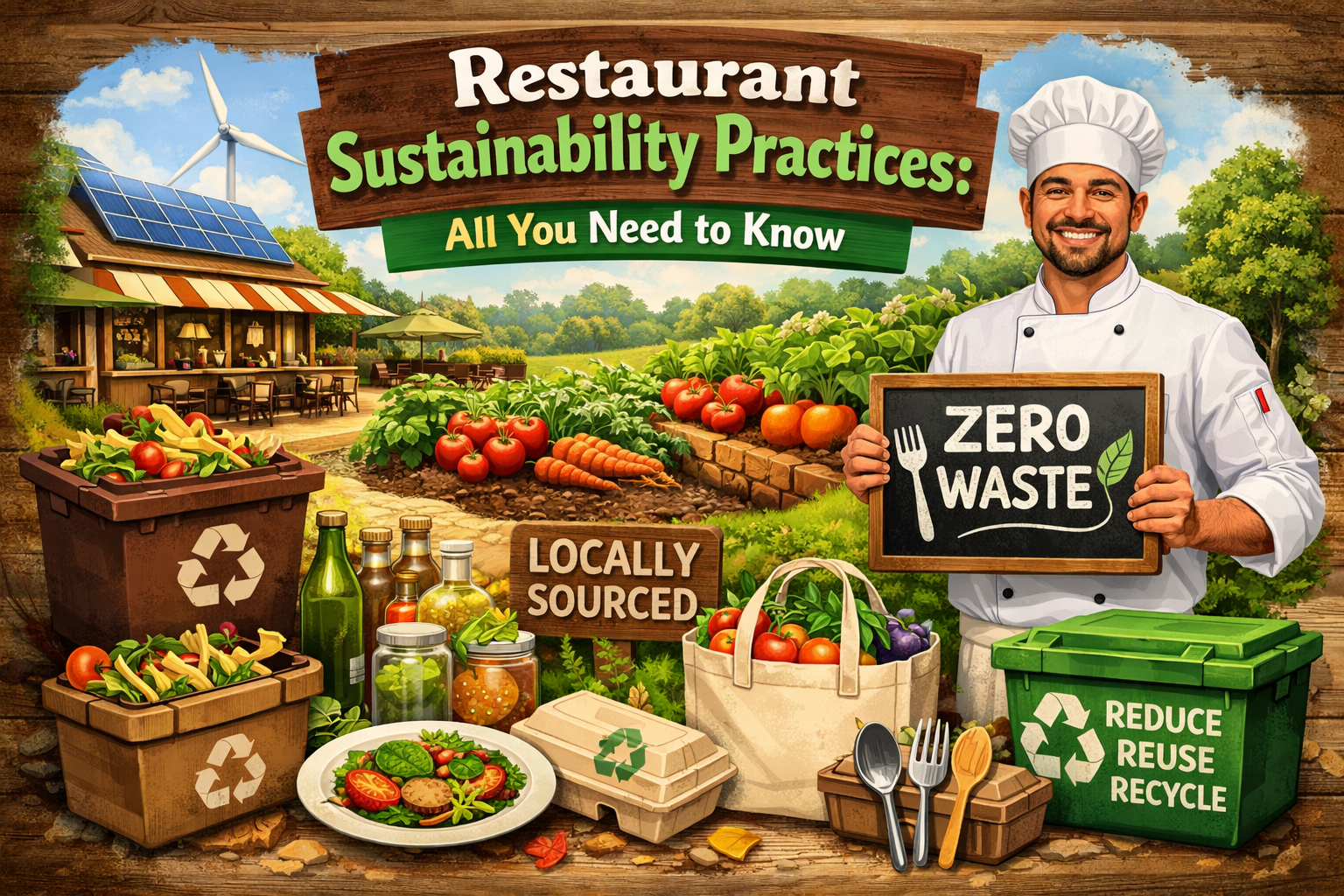
Whether you run a small, medium, or an established eatery, incorporating sustainability practices is necessary to survive in this highly competitive industry. In this article, you will learn about restaurant sustainability practices, and why it matters.
What is restaurant sustainability?
Restaurant sustainability is the method of running a restaurant in a way that minimizes environmental impact and promotes responsible practices. It includes reducing food wastage, keeping an eye on energy consumption, relying on responsible sourcing, using eco friendly packages, etc.
Why restaurant sustainability practices matter?
The importance of adopting eco-friendly practices in restaurants goes beyond just protecting the environment. It offers the following advantages:
- Reduces pollution: Cutting down food wastage, and carbon footprint from daily operations significantly reduces pollution.
- Lowers operating costs: Optimal utilization of resources, eliminating food waste and controlling energy consumption help reduce operating costs.
- Improves customer experience: You will be able to fulfill customers’ demand for eco friendly restaurants offering them a great experience.
- Builds brand reputation: As mentioned above, running a sustainable restaurant helps you earn the reputation of being responsible, and modern.
- Attracts partnerships: It opens doors for collaborations, certifications, and eco-friendly platforms..
6 Restaurant sustainability practices that you must follow
Following the below mentioned steps to transform your ordinary restaurant into a sustainable one:
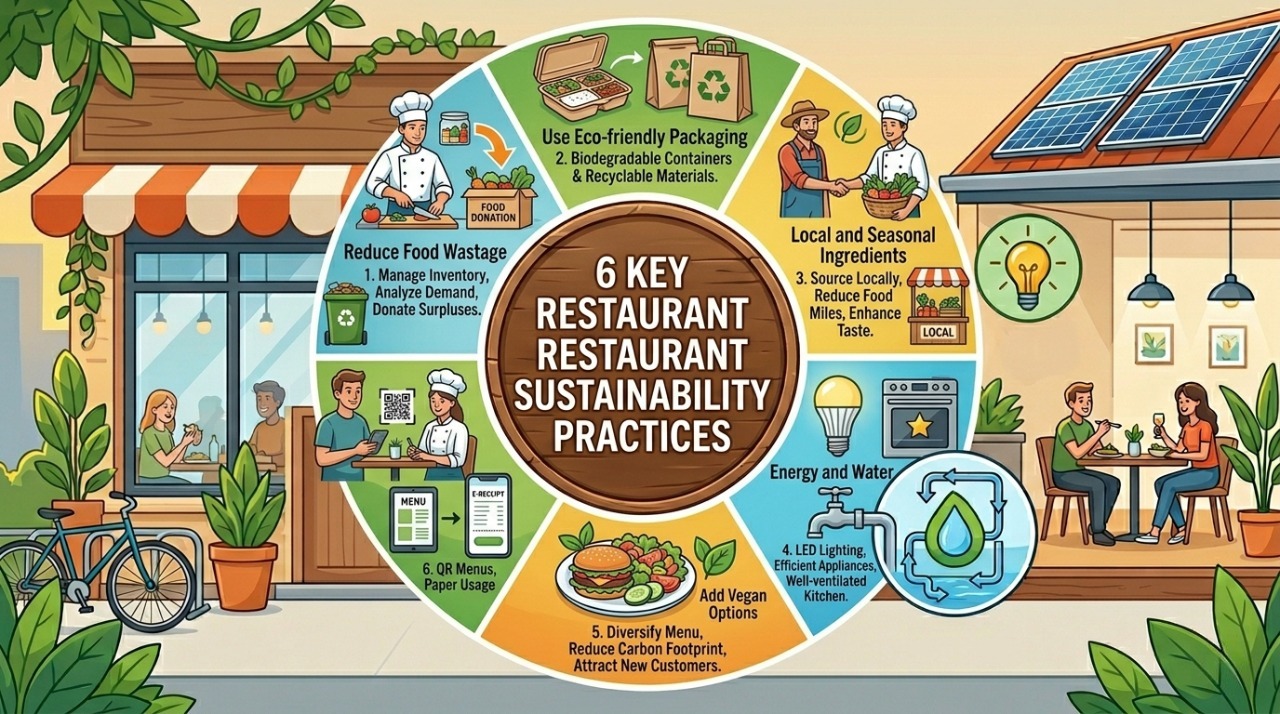
1. Reduce food wastage
Food wastage is one of the biggest challenges that the restaurant industry is facing. A huge amount of food waste that comes from restaurants not only damages the environment but also increases operational costs.
If you are also struggling to reduce food wastage in your restaurant, consider the following tips:
- Manage inventories wisely. You can also use inventory management software to automate the process.
- Analyze demand for food based on days and hours before preparing food in bulk.
- Join hands with food donation camps to donate the unused food of your restaurant.
Decreasing food wastage is the first step to make your restaurant sustainable and profitable.
2. Use eco-friendly food packaging
The current trend of online food delivery has significantly increased packaging wastes, which is dangerously harmful for the environment. This is because some restaurants still rely on plastic bags.
If you are doing that too, make sure you replace them with the following alternatives:
- Biodegradable containers
- Recyclable packaging materials
- Keep the package design simple and clean.
Plastic packaging should be strictly avoided for food deliveries as they not only damage the environment but also harm our health.
3. Stick to local and seasonal ingredients
Transportation of raw materials to restaurants is one of the main causes of carbon emissions, which often go unnoticed. That is why it is better to source food ingredients including grains, vegetables, and fruits from local vendors. This helps you reduce carbon emission.
Besides this, sourcing ingredients locally keeps the freshness intact, which enhances the taste of each food item. This way, you can also empower and support your local vendors in expanding their business.
4. Focus on energy and water consumption
Lights and ACs are essential to build a comfortable ambiance for your customers but keeping an eye on their usage is extremely important to avoid misuse. Moreover, major kitchen appliances used by restaurants are also electricity driven. Make sure you train your staff about energy efficiency so that electricity is not misused. This will let you save money and minimize carbon emission.
Here are some tips:
- Start using LED lights that consume less power.
- Add energy-efficient kitchen appliances.
- Keep your kitchen well ventilated.
- Remember to turn off the appliances which are not in use.
The meat industry is also a contributor to carbon emission in the environment, which is why many people are preferring vegan diets. So having a section of vegan food in your menu not only cut down the amount of emissions but also satisfy your customers. This will ultimately allow you to reach out to a wider audience.
If you still do not have a vegan friendly food menu, make sure you add one and train your chefs accordingly. No matter what cuisine you specialize in, creating a vegan menu is always beneficial for your restaurant in a city like Berlin where veganism is on the rise.
6. Reduce paper usage
Many restaurants still use paper-based menu cards and also offer paper bills. Switching to digital options can easily reduce the amount of waste here.
Consider the following tips to eliminate paper usage:
- Use QR based menu for customers.
- Offer bills with secure payment options.
- Handle bookings and orders online.
Using these methods, you can modernize your restaurant with digitization and cut down paper waste.
Use Foodmato to manage your orders online through a centralized platform.
Wrapping up
We hope that the restaurant sustainability guide will help you understand its importance and show you the right way to adopt such practices in your restaurant. For all the other restaurant needs for online order management, FoodMato is there.